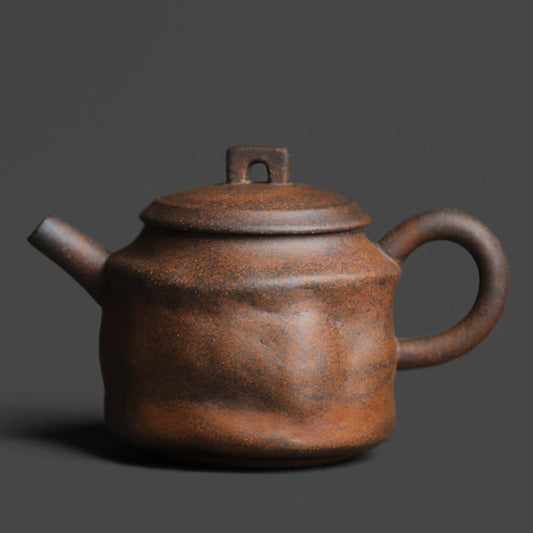
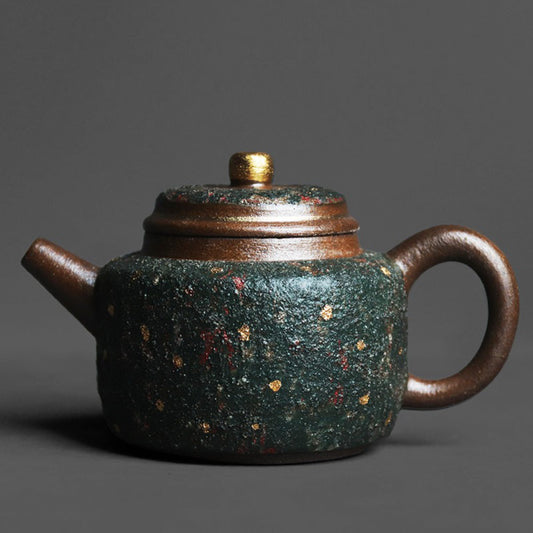
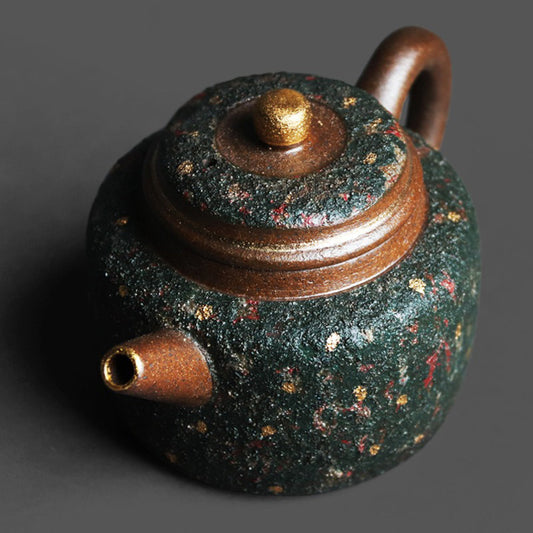
Authentic Chinese Tea Pots: The Heart of the Brew
A Chinese teapot is more than a vessel; it is the bridge between the leaf and the cup. At Jiangnan Sourcing, we curate a collection that spans the two pillars of Chinese tea culture: the "living" clay of Yixing and the refined elegance of Jingdezhen porcelain. Whether you are looking for a teapot that grows with you over decades or a clean vessel to explore delicate aromatics, our collection offers the perfect match for your Gongfu Cha practice.
Yixing Zisha: The Teapot That Breathes
For the serious collector, Yixing Zisha (Purple Sand) clay is the gold standard. Sourced from the yellow dragon mountain in Jiangsu province, these pots are unglazed and porous.
- The "Memory" of Clay: Over time, the porous walls absorb the oils of your tea, seasoning the pot. Eventually, it will enhance the body and sweetness of your brew.
- Heat Retention: Zisha clay has excellent insulation properties, keeping the water at a steady temperature—essential for Puerh, Oolongs, and Black teas.
- Artisanal Craft: Each Yixing pot in our collection is selected for its pour, lid fit, and the quality of the raw ore.
Porcelain & Ceramic: Purity and Precision
When you want to experience the exact, unadulterated aroma of a tea, Porcelain is the professional's choice.
- Flavor Neutrality: Unlike clay, porcelain is non-porous. It does not absorb scents, making it ideal for testing new teas or brewing delicate Green and White teas.
- Heat Dissipation: Thinner porcelain allows heat to dissipate faster, preventing fragile tea leaves from "stewing."
Finding Your Perfect Shape
From the classic Xi Shi and Fang Gu to modern, minimalist designs, the geometry of a teapot affects the tea's expansion. Our guide within each product page helps you choose the right capacity and shape for your specific tea leaf.
FAQ
Frequently Asked Questions
1. Should I only use one type of tea for my Yixing teapot?
Yes, we strongly recommend "dedicating" a Yixing pot to one category of tea (e.g., only Ripe Puerh or only Roasted Oolong). Because the clay is porous, it "remembers" the flavor. Mixing tea types will muddy the taste profile.
2. How do I "open" or prepare a new clay teapot?
Before its first use, rinse the pot thoroughly with hot water to remove any kiln dust. Some collectors prefer to simmer the pot in a bath of the tea they plan to use for 30 minutes to jumpstart the seasoning process.
3. Why is my teapot pouring slowly?
This is often due to the "filter" style. Many traditional pots have a single hole or a ball filter. If you use large-leaf teas, ensure the leaves aren't clogging the spout. For a faster pour, look for our pots with "multi-hole" or "diamond" filters.
4. How can I tell if a teapot is "Handmade"?
Look for subtle variations in the tool marks inside the pot and the transition where the handle meets the body. At Jiangnan Sourcing, we clearly label our pots as Half-Handmade (using a mold for the shape) or Fully-Handmade (formed entirely by hand).
5. Is a smaller teapot better for Gongfu Cha?
In traditional brewing, smaller pots (100ml – 180ml) are preferred. This allows you to use a high leaf-to-water ratio and perform multiple quick infusions, capturing the evolution of the tea's flavor.